Commercial · Hutto & Taylor
Commercial concrete flatwork near me for Hutto lots, pads and walks
Parking areas, dumpster and equipment pads, aprons, curb and gutter, and walks for businesses around Hutto. Poured to the civil sheets, sequenced so you can stay open.
An open-site commercial pour, card by card
Use Next card (or the arrow keys) to work through the stack.
- 01/06 Before bid
Read the civil sheets, then walk it
Joint layout, thickness, steel, finish and slopes come from the engineer's plans. The walk is for what the plans don't show: access for trucks, where a pump sets up, what's open to the public during work.
- 02/06 Submittals
Mix design and products
Mix design, curing compound, joint sealant and any admixtures go to the engineer for approval before the first pour is scheduled.
- 03/06 Phasing
Phasing so the business stays open
Which entrance stays usable, where customers park this week, when the dumpster gets moved. Agreed in writing before demolition starts.
- 04/06 Subgrade
Proof-roll the subgrade
Subgrade is compacted and tested to the geotech's spec, then kept from drying out on clay between approval and pour.
- 05/06 Placement
Sections sized to the weather
On hot days, smaller placements with more finishers, trucks spaced so none waits in the sun, and the first truck at first light.
- 06/06 After
Cure, saw, seal, open
Curing compound right behind the finishers, joints sawn on time, sealant installed, and traffic held off until the engineer's strength or age is met.
Scope
Commercial concrete contractors for lots, aprons and dumpster bays
Concrete commercial contractors come in sizes. This is ours.
We pour the flatwork a small business, church, school or property manager needs: a parking area and its drive aisle, the dumpster pad that keeps cracking under the truck, an equipment pad, the approach apron off the street, curb and gutter, and the walks between them.
Every commercial site plan in Hutto is drawn by an engineer, and the UDC caps impervious cover on commercial sites at 85%. That's the designer's problem to solve; ours is to pour exactly what they drew, on time, with records.
What we don't do: big-box lots, tilt-wall or structural frames. For those we'll point you to a larger commercial concrete company.
-
Dumpster pads
The front-load truck sets its full weight on the pad and apron at an angle. These get thicker sections and reinforcement to the engineer's detail; thin pads are the most common commercial repair call. -
Parking areas and drive aisles
Joint layout from the civil sheets, sawn on time, sealed. Striping comes after curing. -
Aprons and approaches
Where the site meets the street. City, county or TxDOT rules apply depending on which road it is. -
Curb and gutter
TxDOT's benchmark for curb is Class A concrete cured at least 72 hours with a lightly sprinkled subgrade. -
Walks and accessible routes
To the plan slopes: ≤ 2% cross slope, ¼ in. maximum lips, ramps ≤ 8.3%.
Hot-weather placement
Commercial concrete services when it is over 90°F
Big, open placements dry faster than any backyard slab. Check the morning on the gauge.
A parking area is a big flat surface with nothing blocking the wind. On a July morning near Taylor (95.4°F normal high), that's a recipe for plastic-shrinkage cracking unless placement is planned around it.
Time matters as much as temperature. TxDOT's 2024 spec gives concrete at 90°F or more just 45 minutes from batching to discharge, or 75 minutes with a retarding admixture; below 75°F it allows 90. ACI 301 and 305.1 cap concrete at 95°F at discharge. So trucks are spaced, the plant adds retarder or chilled water (up to about 10°F cooler with chilled water, 20°F with ice, per NRMCA), and no load waits in the sun.
When the gauge reads red and fogging and windbreaks can't bring it down, the honest move is a new start time.
Pour-morning check for an open lot
Set the morning you are planning for. The needle shows surface evaporation on an open slab.
kg/m²/h (≈ 0.07 lb/ft²/h) Normal care
- Pre-wet the subgrade without puddles; stage the curing compound before the first truck arrives.
- Sequence placements so each section is cured within minutes of final finish.
- Shorter placement sections and more finishers per section on the open, windward side.
- Retarder or chilled water ordered from the plant; trucks spaced so none waits in the sun.
- Evaporation retarder sprayed between passes; never water sprinkled to help finishing.
- Night or dawn placement, fogging, or a new date. TxDOT itself moves placements to early morning or night when weather threatens distress.
Planning illustration, not a pour decision: the crew measures the real air and concrete temperature, humidity and wind on the day. Bands: caution above 0.5 kg/m²/h, precautions mandatory above 1.0 (FHWA); the 1.0 line is the commonly cited ACI 305 plastic-shrinkage threshold (≈ 0.2 lb/ft²/h).
Sequence
A commercial concrete company's sequence on an open site
The card deck at the top of the page is the order we run a commercial job in.
The difference between residential and commercial flatwork is paperwork and people. Submittals have to be approved before a truck is ordered. Customers, deliveries and the trash truck still need to get in while we work. And everything is inspected against drawings.
None of that changes the concrete fundamentals that apply on any job here: subgrade at the right moisture on clay, steel and dowels where the plans put them, joints sawn on time, and curing that starts the moment finishing ends. Those are the same habits we bring to residential work as a concrete contractor in Hutto.
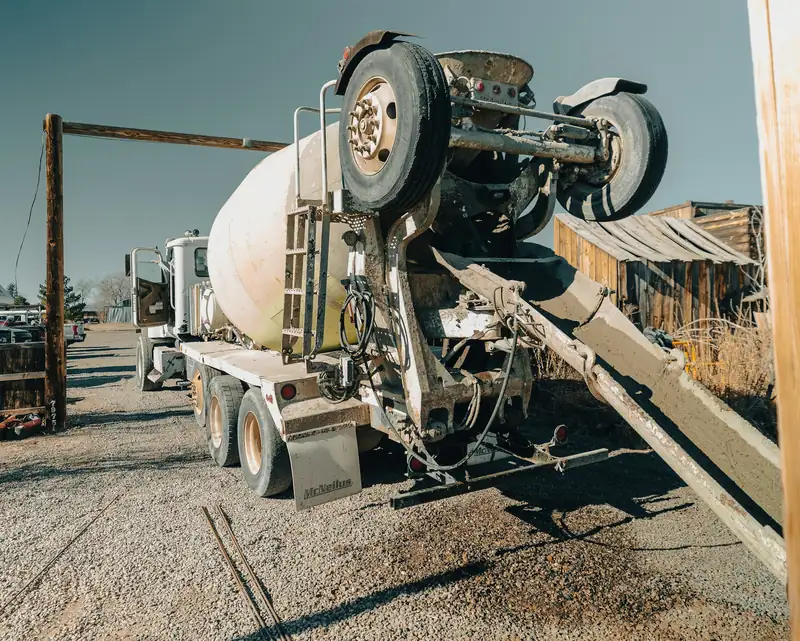
Field notes: local
Commercial flatwork along US 79, SH 130 and Limmer Loop
Where the new commercial flatwork in this area is going in.
Hutto was the fastest-growing city in the Austin area in 2024, up 9.4% in a year, per Census figures reported by Community Impact. Its population went from 1,250 in 2000 to 27,577 in 2020. East along US 79, Samsung announced its $17 billion fab in Taylor in November 2021.
Roads are catching up. The City has taken comments on widening Limmer Loop between Ed Schmidt Boulevard and FM 1660, and Ed Schmidt itself is slated for improvements between Limmer Loop and US 79. New pads along those corridors mean approach work under three different authorities: the City, Williamson County on county roads, and TxDOT on state highways like US 79 (its Form 1058).
We know which office to call for each, and we confirm it before the bid, not after the forms are set.
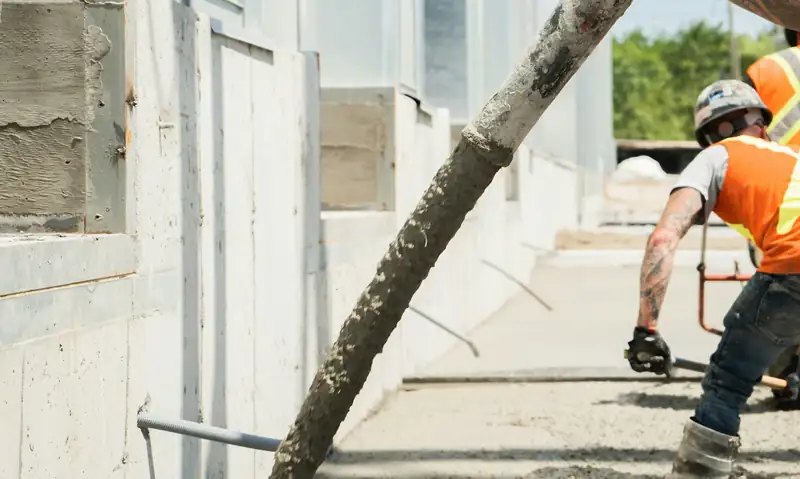
Whose rules does the entrance follow?
Tap a site, then the authority you'd call first. Mouse users can drag.
-
Our call: TxDOT. US 79 is a state highway, so a new or changed connection goes through TxDOT's driveway permit (its Form 1058), on top of the City's site plan review.
-
Our call: City of Hutto. The approach between the property line and the curb is City right-of-way: a ROW permit filed in GovWell, dowels to the curb and the City's details.
-
Our call: Williamson County. Williamson County's driveway policy covers connections to county-maintained roads, including culvert sizing and inspections when forms are set, before concrete is placed.
-
Our call: Williamson County. The mailing address doesn't decide it; the road does. The City notes some Hutto addresses are outside city limits, and on a county road the County is the first call.
-
Our call: Site plan only. Nothing touches a public street, so there is no approach permit. Thickness and reinforcement still come from the engineer's detail.
-
Our call: Site plan only. Work inside the lot follows the site plan and the civil sheets. Phasing so the business stays open is the bigger planning job.
A first-call guide, not a ruling. Road ownership changes over time and some segments are handed between agencies; we confirm the authority for each address before bidding.
Cost
Commercial flatwork cost factors
Commercial bids are built from the drawings; these are the lines that swing them.
Thickness and reinforcement
Truck routes and dumpster pads are thicker and heavier-reinforced than walks, per the plans.
Demolition and phasing
Removing old paving in stages so the business stays open takes more mobilizations.
Subgrade work and testing
Proof-rolling, moisture conditioning, density tests and fixing soft areas.
Night or dawn pours
Night or dawn pours, pumps, retarder and extra finishers on hot days.
Joints and sealant
Sawing on schedule and installing sealant across a whole lot is real labor.
City, county or TxDOT permits
City, county or TxDOT approach permits, inspections and traffic control.
Questions
Commercial flatwork questions
What size commercial jobs do you take?
Small to mid-size flatwork: parking areas for a single business, dumpster and equipment pads, aprons, curb and gutter, and walks. For a big-box parking lot or structural concrete in a building frame, a larger outfit is the right hire, and we'll say so.
Can you pour at night in summer?
Yes, or at first light, when the site, lighting and neighbors allow. TxDOT's own spec moves placements to early morning or night when wind, humidity and heat threaten distress; we plan the same way.
Do you work from engineered plans?
Yes, always on commercial work. Thickness, joints and reinforcement come from the civil engineer's sheets; we submit mix designs and products for approval and pour to the drawings.
Can the business stay open during the work?
Yes, usually, with phasing. We agree on which entrances, parking and routes stay open each day before we start, and we sign and barricade the work area.
Do you handle ADA routes and ramps?
Yes, to the slopes on the plans. Texas Accessibility Standards and the ADA set the limits; the published benchmark we hold walks to is a 2% maximum cross slope, ¼ in. maximum lips and 8.3% maximum curb ramps.
Start a quote
Send drawings for a commercial bid
Email the civil sheets and the bid date, or describe the work if there are no drawings yet. Tell us whether the business stays open during construction.
- Call or text: (737) 201-1843
- Photos and plans: info@eliteconcretehutto.com