Stamped & decorative · Hutto, TX
Stamped concrete patio and decorative work for Hutto backyards
Pattern and color are pressed into concrete while it is still plastic, so the choices happen before pour day. Here is how to make them, and what Hutto sun does to them afterward.
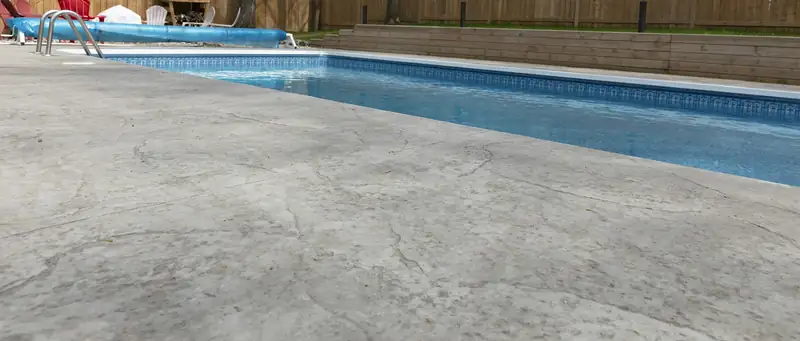
Patterns
Stampcrete patio patterns you can feel
Pictures flatten texture. Rub the strip to see what each mat actually leaves in the surface.
Rub the fresh concrete off five stamp patterns
Rub across the gray strip (press and drag, or drag a finger). Or use Reveal next panel.
- Ashlar slate. Squares and rectangles of cut stone with a slate skin. Its straight grout lines let the sawn control joints hide inside the pattern, which is why it suits big patios.
- Random stone. Irregular flagstone shapes. The eye already expects wandering lines, so a hairline shrinkage crack is harder to spot than on any other pattern.
- Wood plank. Boards with grain and end joints, read like a deck that won't rot or splinter. Run the boards away from the house so the joints line up with the way you walk out.
- European fan. Arcs of small cobbles. The busiest look and the slowest to stamp, since the mats have to keep their arcs lined up across the whole slab.
- Seamless texture. Stone texture with no grout lines at all. Common as a border band around a broom field or on a pool deck where you want grip without a pattern.
Color
Stamp cement color under Texas sun: integral, release, cure
Two colors go into most stamped work, and how it cures decides whether they look even.
Base color comes either mixed into the whole load at the plant (integral) or broadcast as a hardener onto the surface. Release is the powder or liquid that keeps the mats from sticking; it stays in the low spots and gives the stone-like highlights.
Colored concrete is fussier about curing than gray. The manufacturer guidance we follow says: no watering sprinklers while it cures, no wet tools during finishing, and a color-matched cure instead of plain compound. Shaded and sunny parts of a slab dry at different rates, so a patio half under the eave can come out two-toned for a while; the same guidance says early variation "will often fade with time." Plastic sheeting is out for colored work too; NRMCA notes wrinkles leave dark streaks.
Choosing a color for a Hutto yard
-
Look at samples outside, at noon
Central Texas light washes colors out. A swatch that looks right on a kitchen table often reads lighter on a slab in full sun. -
Lighter base colors stay cooler
Dark slabs absorb more sun. Around pools and on west-facing patios, a light base with a darker release gives you contrast without a hot surface. -
Match the house, not the catalog
Pull color from the brick, stone or trim. HOAs tend to approve colors that already appear on the house. -
Ask what sealer goes on top
The sealer sets the sheen and much of the slip resistance. Glossy looks rich and gets slick; satin hides scuffs.
Beyond the stamp
Custom concrete beyond the stamp: stain, exposed aggregate, borders
Decorative doesn't have to mean a full stamped slab.
Some of the best-looking decorative concrete patio work around Hutto is a plain slab with one decorative move: a border, a seeded stone, a stain. Each costs less than full stamping and is easier to repair later.
Flip through the deck for the options we pour most. Photos are licensed stock showing each style, not our jobs.
If you're deciding between decorative and a plain slab for the back yard, the patio page covers sizing, shade and drainage first.
Decorative options, card by card
Use Next card (or the arrow keys) to work through the stack.
- 01/06 Border
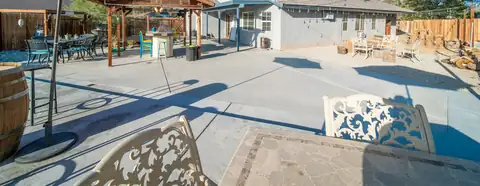
Stamped border, broom field
A textured band around a plain broom-finished middle. Most of the look for a fraction of the stamping labor, and the broom field stays easy to repair.
- 02/06 Aggregate
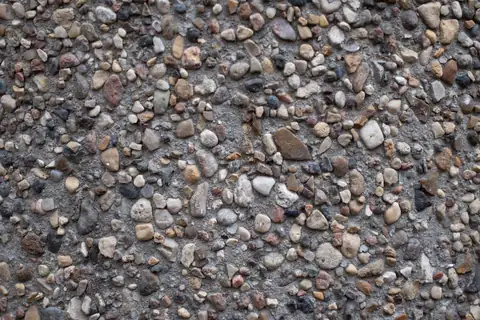
Exposed aggregate
The surface paste is washed off at the right moment to show the stone in the mix. Rough underfoot, hides dirt, no stamping mats needed.
- 03/06 Seeded
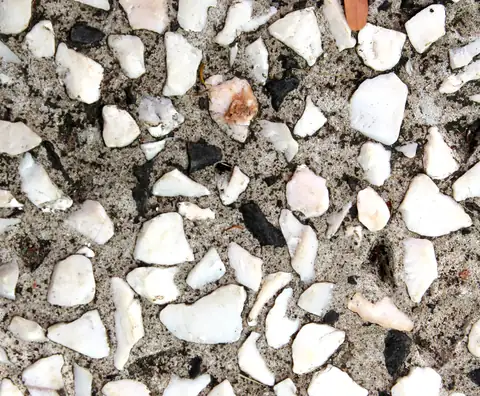
Seeded decorative stone
Chosen stone broadcast into the surface and exposed, for a custom concrete color you can't get from the plant's standard rock.
- 04/06 Process
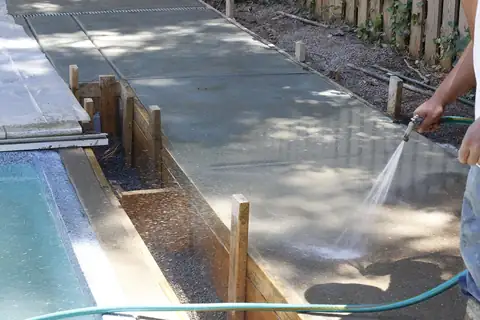
How exposed aggregate is washed
Timing is everything: wash too early and stones pop loose, too late and the paste won't come off. In July that window gets short, which is why these pours start early.
- 05/06 Stain
Stained plain concrete
Stain colors a finished slab instead of the mix. Stamped and stained concrete gets both: pattern from the mat, then hand-applied stain for variation stone has naturally.
- 06/06 Reference
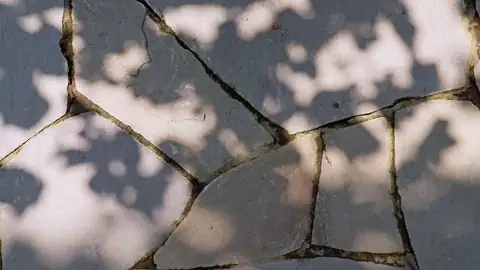
The flagstone look stamping copies
This one is real flagstone, not concrete: the look a random-stone stamp copies. It helps to compare the two before choosing.
Field notes: placement
Stamped driveway, walkway or pool deck: where pattern earns its keep
Pattern looks best where people stand and look at it, and costs most where tires and water work it over.
Pool decks. The best case for stamping: a seamless or light-textured stamp with a grit additive in the sealer gives grip barefoot, and a lighter color keeps feet happier. Pools in Hutto sit in the back yard, at least 5 ft from side and rear lot lines, per the UDC, and the deck has to stay out of easements too.
Front walks. A stamped concrete walkway or a stamped border along a broom walk dresses up the entry without much area. Keep steps and the landing lightly textured so they aren't slick in rain.
Driveways. A stamped driveway works, with caveats: deep textures hold dirt and leaves, hot tires can mark some sealers, and the approach in the City right-of-way is built to the City's details, so pattern usually stops at the property line. A stamped border on a broom-finished driveway is often the better buy.
Existing slabs. Stamping only happens in fresh concrete. For a sound slab you'd rather not tear out, a stamped overlay is the route.
After a few summers
Faded or blotchy stamped concrete: reading what went wrong
Most stamped complaints are about the top few thousandths of an inch, and the fix depends on which layer it is.
When a stamped patio looks tired, the first question is whether the problem is in the sealer, the color or the concrete. Sealer problems (dull, chalky, cloudy) are the most common and the cheapest: the film takes the sun first, and it gets cleaned and renewed. Color that has truly worn through usually shows only where feet and tires go, because integral color runs all the way down.
Concrete problems are the ones a reseal can't hide: a crack that wanders across the pattern instead of following a joint, or pop-outs. Those go back to how the slab was jointed and poured, which is why we plan the joints into the pattern's grout lines before pour day.
Run the loupe over the drawing. If your slab has something it doesn't show, send us a photo.
Inspect an aging stamped patio
Move the loupe over the slab. Keyboard: focus the drawing, then use the arrow keys or Next spot.
Darker band under the eave. Wait first Shade and sun dried the fresh slab at different rates. Color manufacturers note this early variation often fades with time; give it a season before doing anything.
- Darker band under the eaveWait first
- Shade and sun dried the fresh slab at different rates. Color manufacturers note this early variation often fades with time; give it a season before doing anything.
- Crack across the patternJoint problem
- A crack that ignores the grout lines usually means a joint was missing, too shallow or cut late, so shrinkage and clay movement picked their own line. Seal it to keep water out; it can't be made invisible.
- Small cone-shaped pitsCosmetic
- Pop-outs: a piece of aggregate near the surface swelled and broke a small cone off the top. They don't weaken the slab; they can be patched with a tinted repair mortar and sealed over.
- Cloudy white patches in the sealerSealer issue
- Moisture trapped in or under the sealer film, often after sealing on a humid day or over a damp slab. The concrete is fine; the sealer gets treated or stripped and reapplied.
- White powder that comes backClean, then seal
- Efflorescence: salts carried up by moisture and left on the surface. It gets cleaned off before resealing; the color guidance we follow also avoids high-salt aggregates for colored work.
- Washed-out path from the doorReseal
- The sealer has worn off where people walk and the sun has dulled the surface. Integral color is still there underneath; cleaning and a fresh coat of sealer bring the depth back.
Planning illustration. Causes listed are the usual ones; a close look on site (or a good photo) confirms which one you have.
Approvals
HOA approval for stamped color in Hutto subdivisions
Color is the item HOAs ask about most. Expect an architectural committee in most newer subdivisions, Star Ranch and Emory Crossing included, to want the pattern name, the base and release colors and a site sketch. The City of Hutto tells residents to check HOA rules and deed restrictions "even if a city permit is not required." A backyard patio still needs the City permit as well.
In Old Town, anything new that's visible from the street may need a Certificate of Appropriateness from the Historic Preservation Commission before permits are issued. A stamped front walk there is worth asking about early.
Cost
Stamped concrete cost, explained by line
We don't publish stamped concrete prices per square foot without seeing the job. This is what each line on the quote pays for.
The slab under the pattern
Everything a plain slab needs: tear-out, subgrade, forms, steel, concrete. Stamping is added on top of it, not instead of it.
Pattern and mats
Simple patterns with big mats go fast; fans, small cobbles and lots of borders need more hands at the same moment. Crew size on pour day is the biggest stamped line.
Color system
Integral color is priced per yard of concrete; a surface hardener is priced per area. Release color adds material and cleanup.
Sealer and grit
Decorative sealer at the end of the job, plus grit for pool decks and steps.
Patio size and shape
Small patios cost more per square foot than big ones; the crew and setup are the same.
Stamping in summer heat
Stamping has a short window between too soft and too hard. In summer that means an earlier start and sometimes extra crew.
Want pattern without the full price? Ask about a stamped border on a broom field. On the stamped cement patio cost question we'll show you both side by side in the quote.
Questions we hear
Stamped concrete questions
Is stamped concrete slippery?
Yes, it can be when wet, mostly because of the sealer. Deeper textures, a grit additive in the sealer, and a broom or seamless texture on pool decks and steps keep it walkable. We spell out the sealer in the quote.
Does stamped color fade in Texas sun?
Yes, somewhat; any pigment in full sun changes over years. We found no independent fade rates worth publishing. Integral color goes all the way through, so wear shows less; the sealer is what takes the sun first and is what gets renewed.
Can you stamp my existing patio?
No, not the slab itself: stamping happens while concrete is fresh. A sound existing slab can take a stamped overlay instead, a thin layer that is stamped on top.
Why did my new colored slab look blotchy for the first weeks?
3 common reasons: shade and sun dried parts of the slab at different rates, water was sprinkled on it during curing, or plastic sheeting touched it. Color manufacturers note early variation often fades with time; that's why we cure colored work with a color-matched product, not water or plastic.
How long before I can put furniture on a stamped patio?
About a week for furniture and grills, longer than for walking (a day or two), so the sealer and surface aren't marked while the concrete is young.
Start a quote
Ask about stamped or decorative work
Tell us where it's going (patio, pool deck, walk, driveway border) and which pattern caught your eye. Photos of the house exterior help with color. We'll also tell you plainly if a broom finish would serve you better. You're still talking to a concrete contractor in Hutto, not a showroom.
- Call or text: (737) 201-1843
- Photos and plans: info@eliteconcretehutto.com